
ALSO IN THIS ISSUE: Nolan’s ‘The Odyssey,’ Tchaikovsky’s ‘Elder Race,’ and Apple TV’s ‘Sugar’
Have you ever read a novel and wondered about the initial sparks that ignited the story idea in the author’s mind? That was one of the questions that I had after reading Adrian Tchaikovsky’s Elder Race. (More thoughts about the book itself in a separate story below.) As many of you probably know, Tchaikovsky is an exceptionally prolific writer, with about sixty novels and novellas under his belt so far. He’s an Arthur C. Clark and Hugo award winner and has been nominated for another Hugo this year for his novel Shroud.
So where do you get the goods, Adrian? In an interview on the podcast How to Write Absurdly Well, Tchaikovsky laid it out for me: “The advance-advance planning is always world with me, which is a practice I picked up long before I started writing, because I basically come out of a tradition of running role playing games.
“When you’re creating a world for a role-playing game, you make it very robustly, because you don’t know what the players are going to break,” he added. “But you’re also making a world specifically for other people to see, even if it’s just like three other people ’round a gaming table. That then translates very directly into making a world for a book, and it usually results in a world that is going to be very immersive and very complete and will extend considerably beyond the pages of the book itself.”
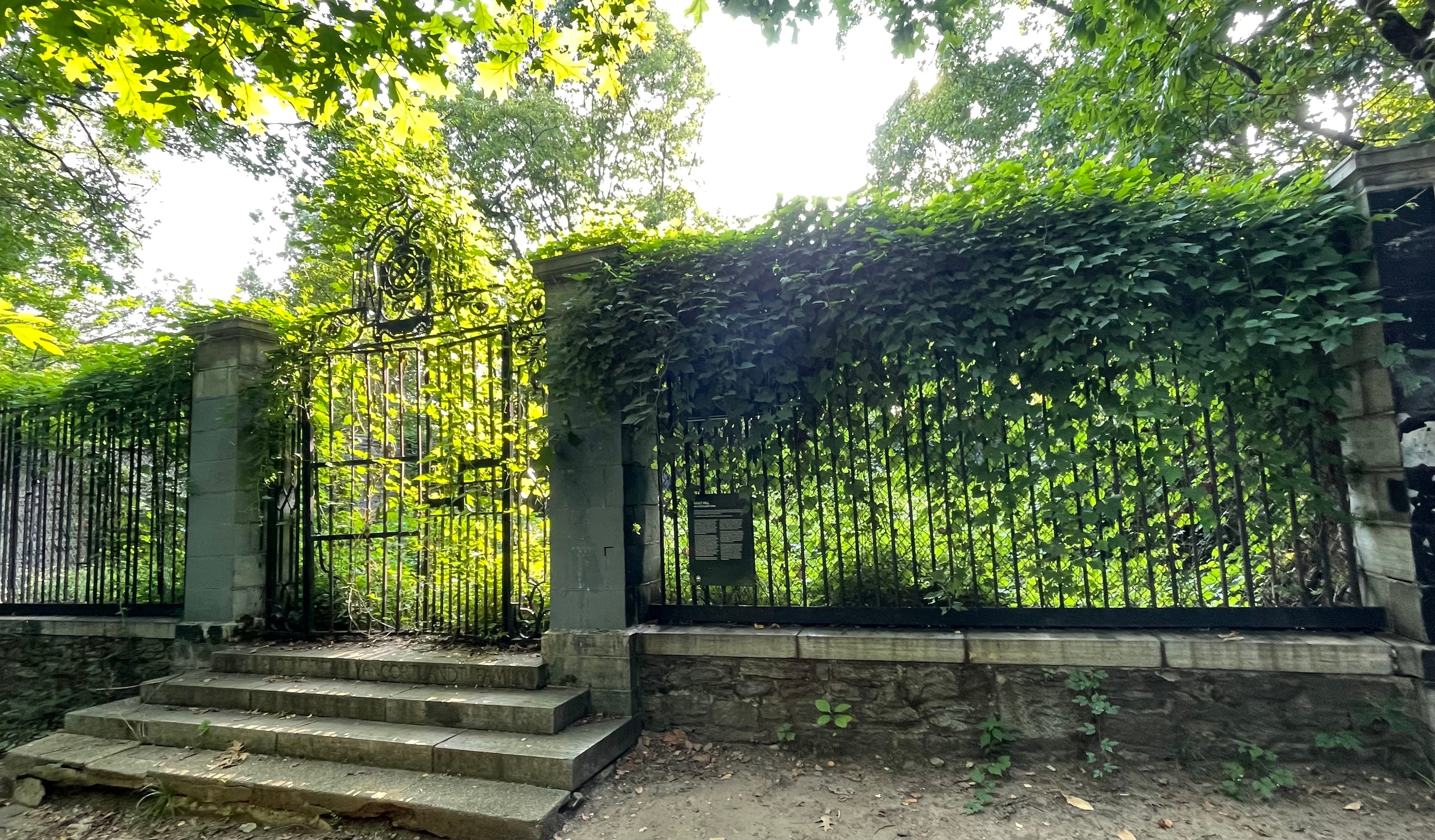
Starting with an idea about a world certainly hits home for me. I was reminded of that on a recent walk through the wooded section of Van Cortlandt Park near my home in The Bronx. The image you see here is of the Vault, which once housed the remains of the wealthy Van Cortlandt family. And it also was used as a hiding spot for some of the city’s most valuable records during the Revolutionary War when the British occupied the city. Now, it’s pretty much abandoned, except for some kids who like to hang out there.
It almost felt like the vault was begging to be part of a story. It’s one of the inspirations behind a flash fiction piece I wrote called “I Used to Know That,” which appeared in The Pink Hydra magazine. I also used my past experiences visiting the offices of executives in large media companies to build futuristic settings in my novel series “The Charismites.”
Oftentimes I get surges of inspiration from emotional reactions to the world around me—what makes me intrigued, frightened, full of wonder, perplexed, or amused. Emotions are like creative engines, at least for me.
What about you? If you write, where do you find your seeds of inspiration? I’d love to know. Drop me a note!
My most recent “appearances”:
Lancer Kind’s Scifi Thoughts podcast, including this episode about the larger world in The Juice, this episode about characters, and this episode about Charismites, and their strange powers.
My short story, “Imaginary Children,” is among the many speculative stories in an anthology published by the fine folks at Metastellar magazine. Check it out on Amazon or Barnes & Noble.
About that Circe Character in ‘The Odyssey’ …
I’ve got a different take on what the witch goddess is like

This is how Circe lives in my mind, more or less. Photo by Shifaaz shamoon on Unsplash
By a stroke of luck, I managed to score a ticket to a 2 PM weekend IMAX screening of The Odyssey, which is really saying something in the greater New York City area right now. I was thoroughly wowed by Christopher Nolan’s interpretation of the epic poem. That Cyclops! Wow! My favorite scare in the whole film. While there’s tons of other aspects to admire, Nolan’s version of the character Circe wasn’t in synch with my mental image. Samantha Morton did a fine job in portraying the Circe that her imagined, but I don’t see the character as that brutish.
My version of Circe was shaped by Madeline Miller’s book, Circe, which I wrote about early last year. It takes the slim references of Circe in Greek myths, including Homor’s poem, and expands on the goddess’s tale in a way that makes her a sympathetic character—someone who was constantly insulted and spurned as a child but eventually finds wisdom, love, and power after she’s exiled on the island where Odysseus meets her. In fact, they have a love affair. I came to envision her as a much sexier character. Yes, she turned men into pigs, but she had a few extra reasons in Miller’s book.
Of course, there’s not just one way to interpret The Odyssey. Recently Miller spoke about Nolan’s film in a New York Times podcast interview. “Part of the tradition of retelling an adaptation is that you are trying to make the story stand on its own in a new way,” Miller said. “And so, the question is not, is it faithful in X way and Y way? It’s that, does it sit as a whole and move you? Does it mean something?”
‘Elder Race’: The Search for a Horrifying Demon
A motley team struggles to understand each other (and the truth) in Tchaikovsky’s novel

If you haven’t dipped into Elder Race, by Adrian Tchaikovsky, now might be a really good time to do so. The second novel in the series, Engines of Reason, is going to drop in September.
Recently I heard someone say that Elder Race straddles the fantasy and sci-fi genres. And that’s how it’s also described on Amazon. But to my mind it’s pure sci-fi. It’s about civilization on a distant planet that originally was established by Earthlings. So much time has gone by that the planet’s population has come to believe in an origin story that only vaguely resembles what actually happened, and their version is mythical in nature.
Only one person there knows what really happened—someone sent through time and space by Earth’s inhabitants to study the life that’s evolved on the planet. The character, Nyr, is more sophisticated than Earthlings today, part of what’s known as the Elder race. He lives in an isolated tower, and no one on the planet has approached him in living memory.

Nyr is thought of as a sorcerer by the people there, but he’s actually a second-class anthropologist with access to technology the population doesn’t have, and which seems magical. He’s awoken from a long, subconscious state by a young woman named Lynesse who’s a lowly daughter of the queen—someone who everybody else thinks is a pain in the neck. Lynesse wants Nyr to help her destroy a demon that’s terrorizing different regions. Nyr’s scientific knowledge makes him believe that the demon is hardly a fantastical creature, and he sets off with Lynesse, her friend, and another disreputable sort they pick up along the way—most of them determined but petrified of what might happen.
It’s the tale of a man who doesn’t feel properly equipped to help a population that has developed its own culture and language, which he finds baffling at times. As much as it’s about the end goal of ending the terror, it’s also about futuristic human life forms trying to understand each other in ways that sometimes feel impossible. And in that sense, it seems to echo the clashes we find in our own world today.
‘Sugar’ Plays With a Subtle Form of Sci-Fi
Colin Farrell portrays an intelligent, sensitive alien in the Apple series
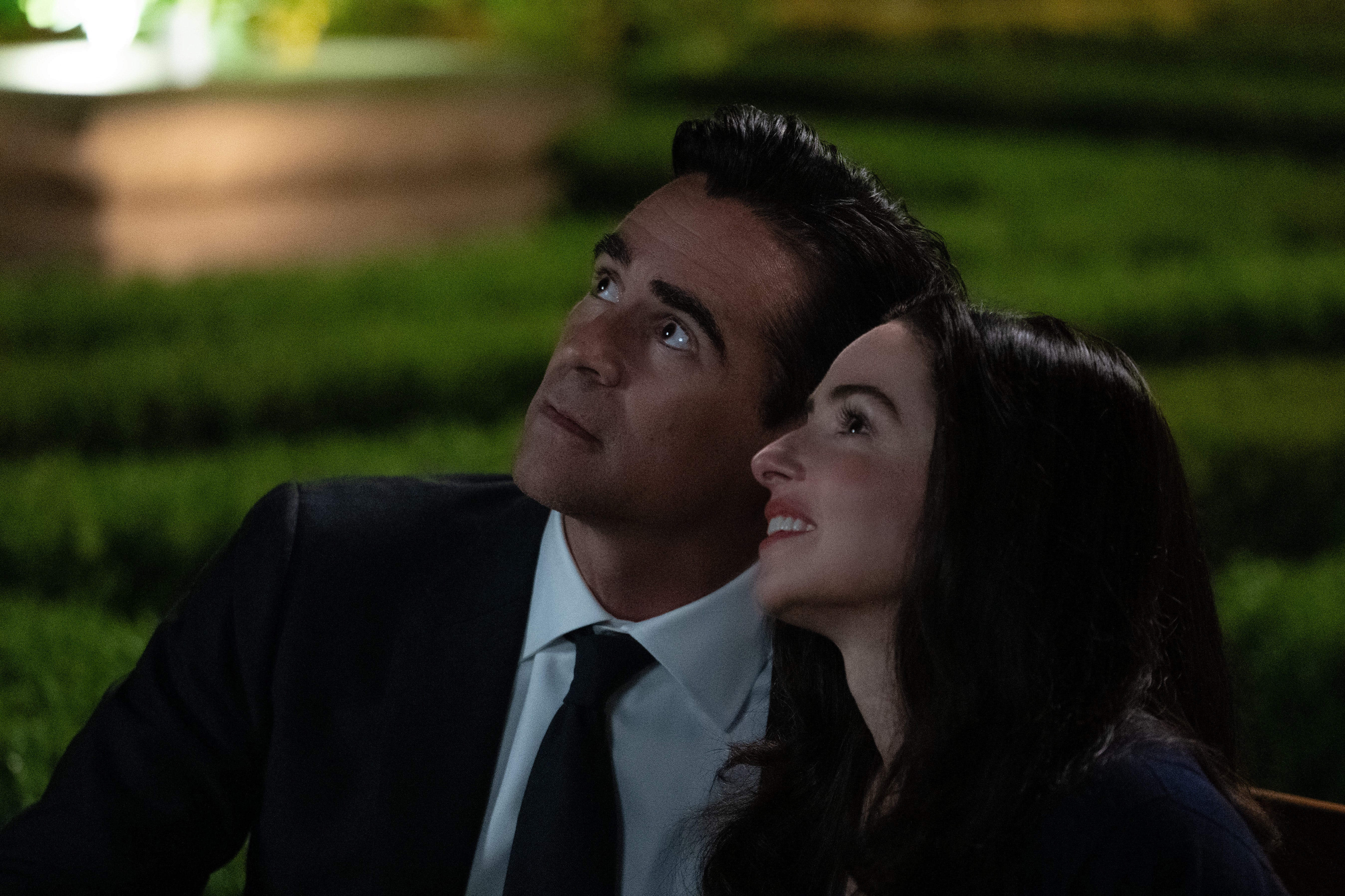
Colin Farrell and Laura Donnelly in the second season of ‘Sugar,’ now streaming on Apple TV
The sci-fi element in Apple TV’s series Sugar is subtle in the first season, and more pronounced in the second. While it involves an alien race, it’s a far cry from franchises like Star Wars or Star Trek. Instead, the vibe hearkens back to detective yarns of the past—particularly as the main character, Sugar, has a thing for old movies, heavy on the Hitchcock. Because it’s set in Los Angeles, its tone reminds me especially of Roman Polanski’s Chinatown.
This is a series with finely wrought characters, rather than high tech hijinks. Colin Farrell plays Sugar with a sense of longing and sharp intelligence. And while there’s certainly some violence throughout the series, the focus is more on unraveling mysteries that relate to missing people—one of which is Sugar’s sister.
It took me a while to get to the second season. Once I did, it was impossible to stop watching. I have one quibble: the frequent flashes of retro movie clips is like a game of “Name That Film!” for me, and occasionally it messes with my suspension of disbelief. But that might be a personal problem.
Also on My Radar
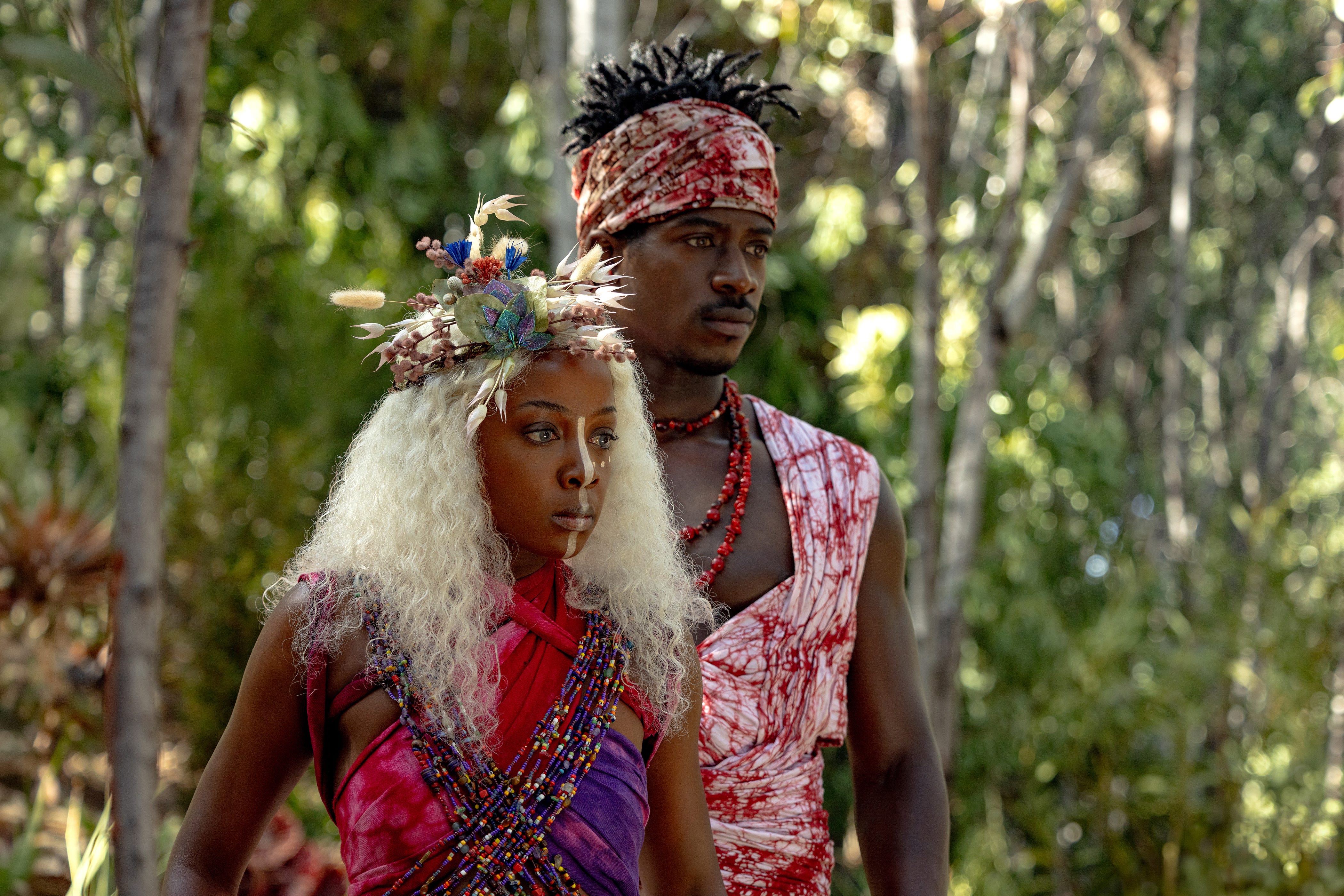
Thuso Mbedu and Damson Idris in ‘Children of Blood and Bone.’ Photo Credit: Lephatse Motshana, courtesy of © 2026 Paramount Pictures. All rights reserved.
‘Children of Blood and Bone’ Official Trailer—Paramount Pictures
‘Spider-Man: Brand New Day’ Is a Superhero Movie for Yearners—Wired
Apple TV Lands Rights To ‘Fourth Wing’ Author Rebecca Yarros’ Upcoming Novel—Deadline
‘Clayface’ Director James Watkins Says the Batman Villain Will Have ‘Ick And A Lot Of Gore’—Deadline
‘Blade Runner 2099’ Official Teaser—Prime Video
‘Neuromancer’ Series Official Teaser—Apple TV